Going Freelance in Your Third Year as a Doctor Without Becoming a Board-Certified Specialist: Is It a Real Option?
No video for this article
Contents
"What do you think about skipping board certification and going freelance from your third year as a doctor?" This was something people around me often talked about when I was a junior resident, during the two-year initial residency.
Some doctors said that becoming a board-certified specialist was a given, while others said it was up to each person. But all of them were on the route of becoming a board-certified specialist after junior residency. No one around me had chosen to go freelance from their third year.
I also received a range of opinions from senior doctors. Some were quite harsh, while others encouraged me.
In the end, I didn't enter a specialty residency program, and I worked freelance for a little over a year.
In this article, I'll write about what I learned during that year and a bit.
Conclusion
This isn't a path I can recommend to everyone. My view is that if you don't have a particular goal, you're better off becoming a board-certified specialist.
I'll compare the good sides with the hard sides I felt after actually trying it.
You Can Set Your Own Schedule

First, on the good side, there's time. This is often mentioned, so I'll keep it brief.
You can set your entire schedule yourself. You can take time off or work whenever you like. You can even take long breaks.

In my third year, after going freelance, I traveled abroad often. I would travel overseas for two weeks, then rest for two weeks after coming back. For the next two weeks, I would do nothing but overnight on-call side shifts at various hospitals, one after another.
I think this is something you could hardly do as a regular employee. I've written about my travels in other articles.

You Won't Struggle for Money or Work

When I was a junior resident, some doctors were worried about me taking this path. They told me, "Without a specialty, jobs are already disappearing. You won't be able to make a living in the future."
Honestly, I wondered whether that was really true. From my experience of actually doing it, that's not the case at all.
As a third-year freelancer without a specialty, I worked more than 100 shifts in one year without any problems. When I applied, I was hired without any trouble, and the hourly rates were fine. I think this means there's plenty of work even without a specialty.
That said, there's some truth to the warnings. In some urban areas, there's fierce competition for jobs, and I think it would be hard if you lived in a city and worked only in cities. Easy postings like overnight on-call shifts where you can usually sleep through the night are decreasing, and when I apply for health checkup jobs in prefectural capitals and similar cities, I'm often not hired.

If you work mainly in rural areas, there's no problem. There's a lot of work in rural areas, and young doctors are very welcome.
My gut feeling is that you could keep this up for 10 or 20 years. If the work does decrease, it will probably be when rural hospitals themselves gradually disappear.
Note that "not struggling" refers to the amount of work. There are limits to the kind of work you can do, which I'll cover in the section on the hard sides.
You Face Strong Criticism from Those Around You

From here on are the hard sides I felt after actually trying this path. First, as expected, you face strong criticism from those around you.
I sometimes received quite harsh opinions as soon as I said I would take this path. After actually taking it, some doctors look at you quite coldly. I also had chances to go to large hospitals, and there too I was told harsh things.

After all that, what would happen if you tried to re-enter a program? My understanding is that it would be difficult at popular hospitals.
On the other hand, I think programs that are short-staffed and not very popular would welcome you without any particular problem.
The Hospitals You Can Work at Are Limited
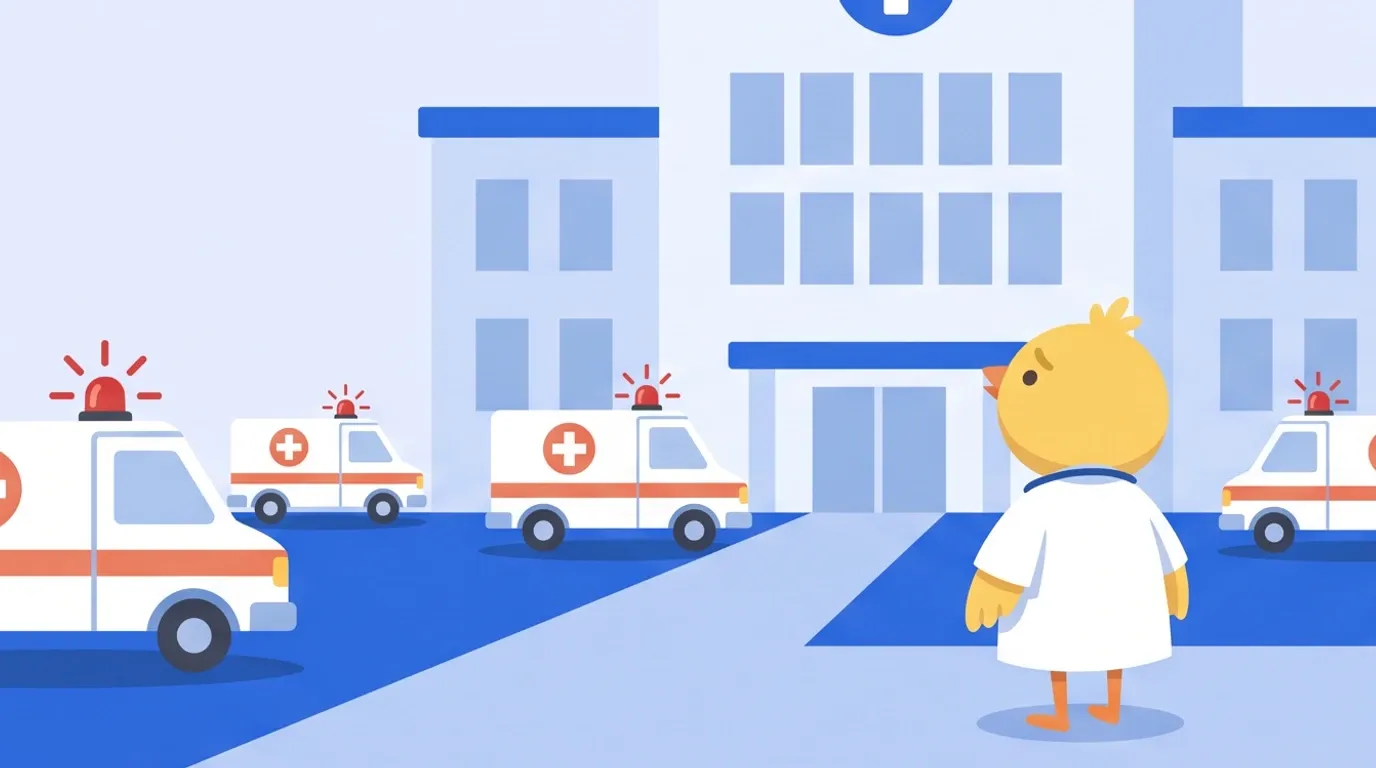
The other is that the hospitals you can work at are limited.
At hospitals where ambulances keep coming in, I don't think I could take responsibility myself, so I can't apply in the first place. Even if I did apply, I don't think they would hire me.
As a specialty resident, you have senior doctors and can properly build experience with their support. As a freelancer, you can't do that.

What you can do without a specialty is so-called relatively easy work, such as the following.
-
Overnight on-call shifts where you can usually sleep through the night
-
Walk-in outpatient clinics with relatively few patients
-
Health checkups
There isn't much to do, so it is easy. But honestly, it's boring. As I keep at it, it feels as though my brain is slowly melting.
If You Have No Goal, Become a Board-Certified Specialist

To sum up, the good sides are time and money, and the hard sides are the criticism from those around you and the limited hospitals you can work at.
Of these, money is something you can earn later through side shifts. You can make up for it.

Time, on the other hand, doesn't work that way. There are life events you can only do at a certain stage of life. For me, that was travel.
In short, the question is whether there's something you want to do with the time and money you gain by not entering a program. If you can't answer this question, I think you're better off becoming a board-certified specialist.
This part also involves personal values, so I'll write about why I chose this path and how I think about it now in the next article.