For Medical Students: A Loner's Survival Strategy

No video for this article
Contents
"Can you graduate from medical school and get a medical license as a loner?" If you're a medical student who isn't comfortable with social circles, or someone aiming for medical school, this is something you'll want to know.
As I think comes through in all my posts, I'm not good at belonging to communities. If there were such a thing as a "class loner ranking," I'm confident I would definitely have been at or near the top.
In this post, I'll write about the survival strategy I used in medical school.
Conclusion
Even as a "loner" who doesn't belong to any social circle, you can get your medical license without any problem.
After describing what my classmates were like, I'll look back on how I spent each year of school. Finally, from where I stand now, I'll consider how it would have been best to spend those student years.
Medical students are mostly nice people

First, most of your classmates in medical school are what you'd call "nice people."
If I had to give you an image, they're a collection of class representatives. If you look like you're struggling, they'll come and help you on their own, and failing that, if you sincerely bow your head and ask, they'll lend you a hand.
Also, I hear that in other faculties students are ranked by their grades, but in medical school, grading is basically absolute. There's no competing with your classmates.
So even as a loner, you can easily get hold of exam materials and all sorts of information.
Medical schools also have people like an "exam preparation committee" who manage past exam questions.
Even for exams where the question papers are collected afterward, classmates divide up the questions among themselves, memorize them, and reconstruct them. They also bring back materials from upperclassmen and put together model answers.
Entirely on my own, I probably could not have graduated. I'm deeply grateful to my classmates.
That said, being carried completely on their backs didn't sit quite right with me. So I passed along things like notices of classroom changes and any information I happened to learn, without holding back. Even without being deeply involved in a community, there are ways you can contribute.
In years 1 and 2, join a club even if you don't want to
From here, I'll go through my strategy for each year in order. (In Japan, medical school is a six-year program that most students enter straight out of high school.)
First, in years 1 and 2, please join a club even if you don't want to. University is completely different from high school, and there's a limit to how much you can do entirely on your own.
The mysterious system of choosing courses
Unlike in high school, you have to choose your own courses. The medical courses are all required and are sometimes registered for you automatically, but the classes you take with students from other faculties in your first year have to be chosen yourself.
Even if you forget to register, you won't get any notice, and you'll want to avoid finding out that you've already been held back a year right after starting school.
Medicine: a field of study you've never seen before

You start from a state of knowing nothing: the difference between cells and tissues, some mysterious organ called the spleen, and so on. You can't even tell what's important.
Also, basic medical science textbooks commonly run over 500 pages each. Covering all of it is nearly impossible, and you don't need to.
So you need to switch the way you study, too. Instead of "drilling everything into your head perfectly and scoring 90% or more," you have to aim for "grasping a huge volume roughly and scoring 60% or more."
Joining a club gets you materials

In that situation where you don't know left from right, as long as you've joined a club, you can get information and materials (such as model answers) from upperclassmen.
Rather than the thick textbooks, if you memorize and understand three to five years' worth of the materials you get from upperclassmen, there's a good chance you'll pass.
In the first semester of my first year, I didn't know these materials existed and struggled a lot. Once I started getting them in the second semester, I felt I had quite a bit of breathing room.
Years 3 and 4 are easy with QB Online

Next, for years 3 and 4, QB and the upperclassmen's past exams are enough, so I have nothing in particular to say.
There's a collection of past national medical licensing exam questions called "Question Bank (QB)," published by the same company that puts out "Byōki ga Mieru" (a popular illustrated medical textbook series). You just keep working through the relevant subjects. Each subject has a little over 100 questions at most.
Beyond that, if you do several years' worth of the past exams you get from upperclassmen, you'll be fine. You should have picked up how to study during years 1 and 2, so I don't think you'll have any trouble.
At the end of year 4 there's also a test called the CBT (a nationwide computer-based exam taken before clinical training), but unless you've really been slacking off, it's not a problem, so there's no need to worry.
For textbooks, Byōmie and Review Book

Each specialty department may try to get you to buy its textbook, but most things are covered in Byōmie (short for Byōki ga Mieru). Even if you buy an expensive book, there's a good chance you'll never read it again.
Byōmie isn't a book you read cover to cover; it's a book you read for the parts you're curious about. I think the electronic version alone is basically enough.
Review Book (a concise review series), on the other hand, is a book you read cover to cover, memorize, and fully understand. Each specialty is condensed into about 100 pages, which is necessary and sufficient, and if you have it down perfectly, it will carry you all the way to the national exam.
Year Note (a comprehensive reference book) is too detailed for a medical student's level, so I don't think everyone needs it.
Studying with videos isn't necessary for everyone either. Figure out whether you're better at learning from videos or from reading books.
Years 5 and 6 require the ability to talk to people
Then, years 5 and 6 are hands-on training at the hospital, so you need not just studying but also the ability to talk to people.
Year 5: Polyclinic
You form groups of about five people and rotate through every department. There are almost no exams.
There seem to have been some groups where conflicts broke out, but as a loner, there's no way to get dragged into them in the first place. In my case, I was lucky to be with kind people, so it was comfortable.
Year 6: Clinical clerkship
You rotate alone through departments you've chosen. Unlike Polyclinic, there's no one to back you up. Without at least minimal communication skills, it's tough.
To the people working at the hospital, medical students are in the way to begin with. Many people are kind, but it's also true that some feel that way. You get left on your own, or things get very uncomfortable.
This is something like a warning from your environment. If you can't handle yourself well here, there's a good chance things will be hard once you become a junior resident (in the two-year initial residency), too.
But the clinical clerkship is also a rare, good opportunity to jump into a new environment every two weeks, alone or in a small group. It's only two weeks anyway, so if you set aside your embarrassment and try out various things each time, like reinventing yourself the way people do when they start university, it makes for good training.
Incidentally, back then my communication skills had half atrophied from disuse, and I even had trouble making eye contact with people.
Now I can work normally even at a hospital I've never been to, and at several hospitals I've been told that the nurses and other non-physician staff think well of me. It'll be fine. With training, you can manage.
Graduation exams and the national exam
The exams, on the other hand, are basically the same as before: you just work through past questions using the study method you've developed.
People sometimes say that "information from those around you is important," but I don't really feel you need to be swayed by that. I studied on my own, had no particular problems, and passed with an average score.
All I did was drill about five years' worth of past questions into my head until I understood all of them. As for textbooks, the ones you bought in years 3 and 4 are enough.
Prioritize things you can only do now
Finally, about how to use your time: while you're a student, please prioritize things you can only do now. You'll have to study medicine later whether you like it or not.
It's also more efficient to study while seeing actual patients' cases. Medical school is said to be busier than other faculties, but it's overwhelmingly less busy than high school. Use your abundant free time on the things you want to do.
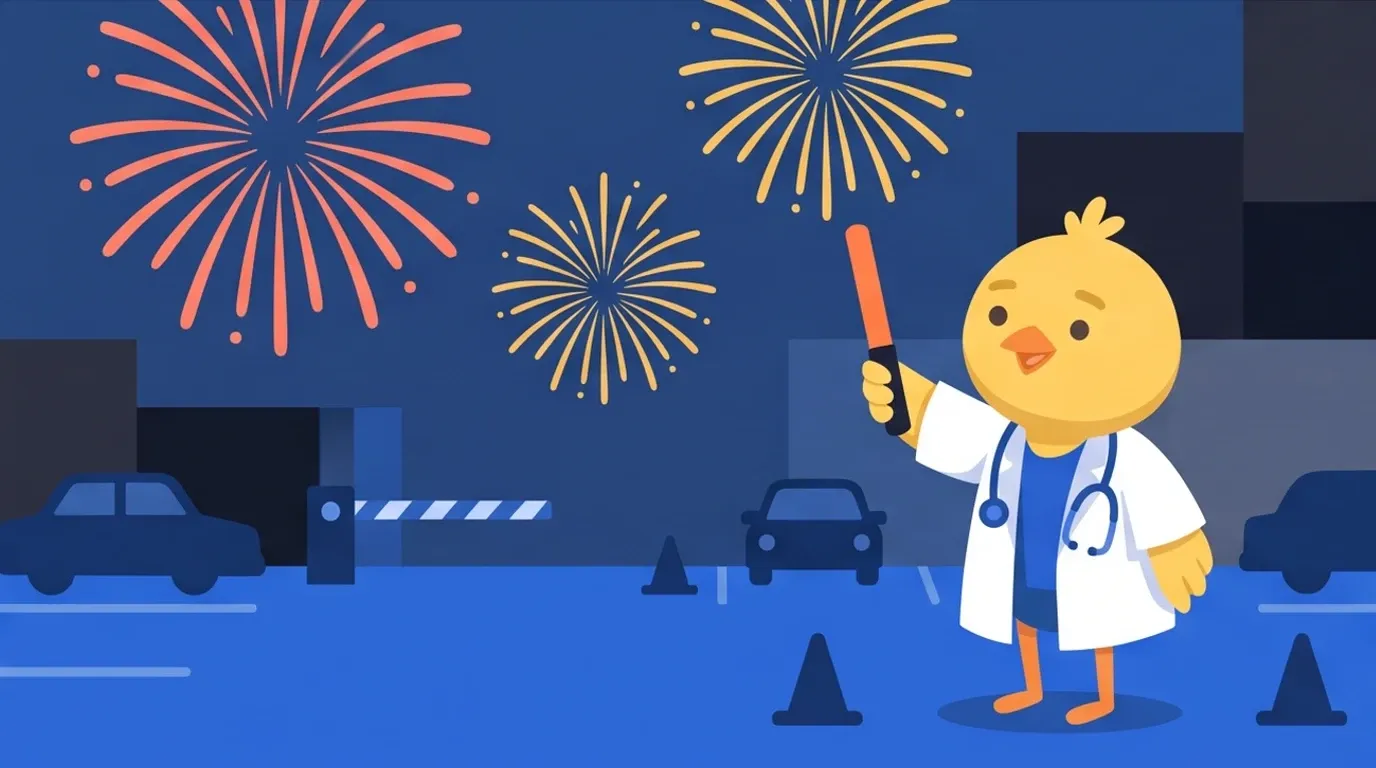
I, too, have a feeling I should have done the so-called "youthful" things. But I don't know if I could have. At a fireworks festival where lots of my classmates were, I was working a part-time job directing traffic in the parking lot.
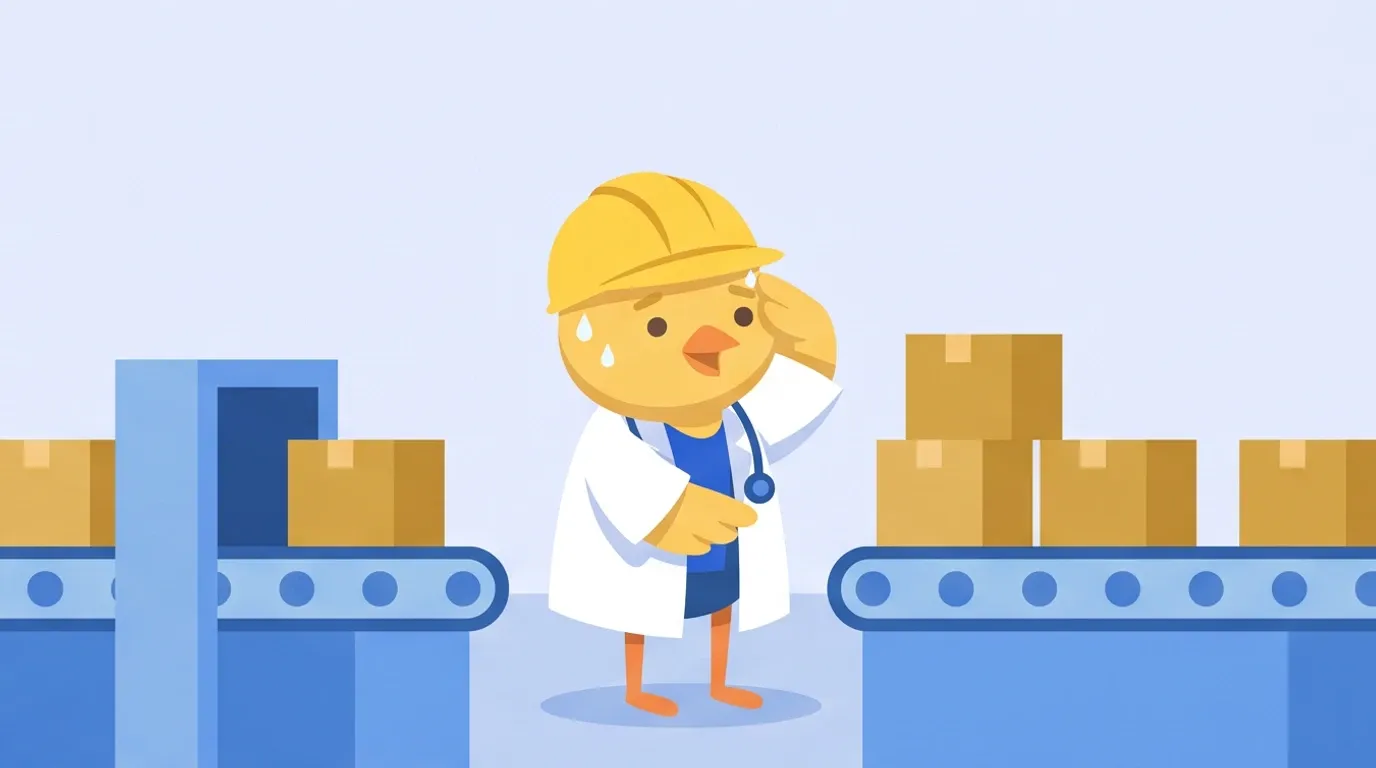
I'd like you to choose your part-time jobs by what the work is, not by the pay. For the rest of your life, you'll be called "Doctor" constantly as it is.
Rather than working as a cram-school tutor, I feel that getting some experience at events where you get yelled at nonstop, or as a factory worker, will make you more resistant to stress later on.
Your late teens and early 20s are a time you only have now.
You can become a doctor even as a loner
To sum up, you can handle the medical school studying itself on your own. Where you need other people is for materials and information, and your classmates and upperclassmen from your club will pass these around. The rest is the ability to talk to people, and the clinical clerkship will train that.
Even without being deeply involved in a community, if you connect with people only where you need to, you can get your medical license without any problem, even as a loner. And on top of that, please use your leftover time on things you can only do now.